Your smile is often the first thing people notice. It conveys confidence and warmth.
A small imperfection is sometimes enough to make you hide that smile. You might
have a minor chip from a sports injury. You might have a stubborn stain that
whitening treatments fail to remove. You might have a gap between your front teeth
that distracts from your appearance.
These issues do not always require expensive or invasive treatments. You do not
always need porcelain veneers or crowns. There is a simpler solution. It is effective
and affordable. It is called dental bonding.
This procedure is a staple of cosmetic dentistry. It allows a dentist to reshape and
restore a tooth in a single visit. At Amity Dentistry, we use dental bonding to perform
quick teeth repair and transform smiles. This guide explains everything you need to
know about the process.
What Is Dental Bonding?
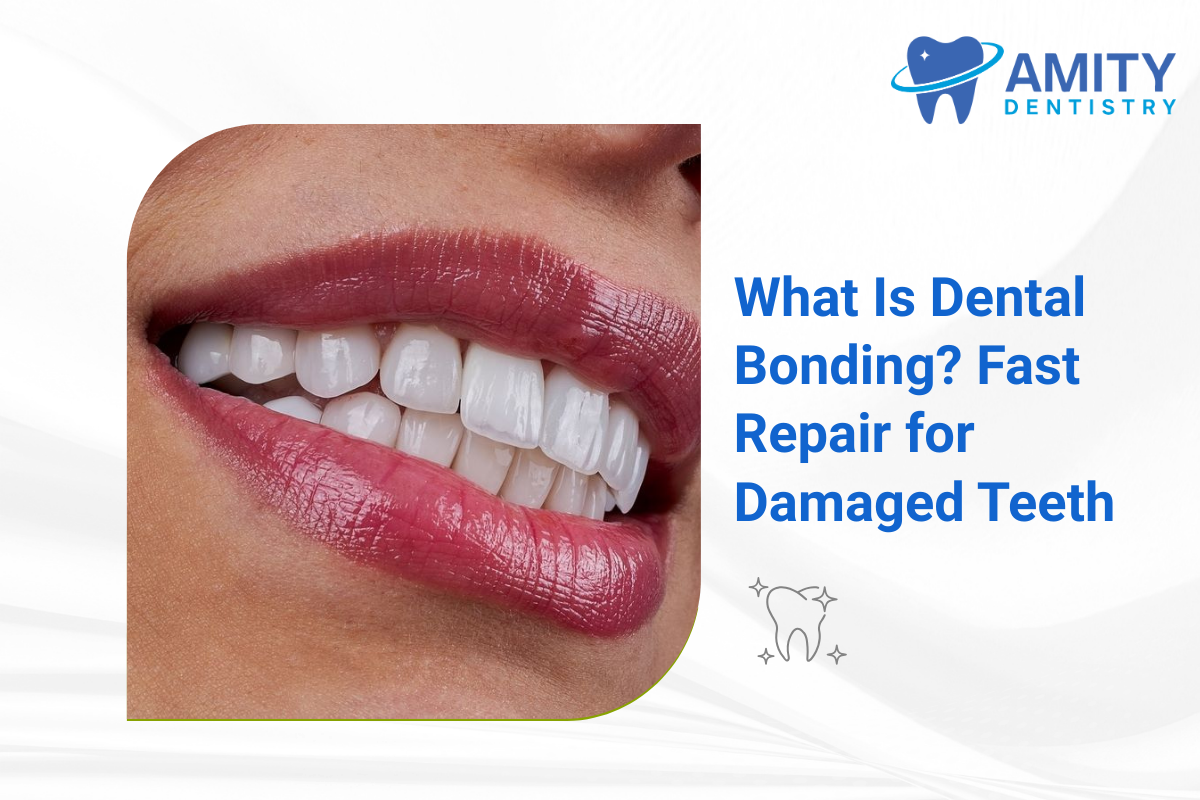
Dental bonding is a cosmetic dentistry procedure. A dentist applies a tooth-colored
resin material to your tooth. They use a special light to harden the material. This
bonds the material to the tooth to improve your smile. The material used is a
composite resin. This is the same material used for white fillings. It is a mixture of
durable plastic and glass.
The term bonding comes from the way the material adheres to the tooth. It fuses
with your enamel on a microscopic level. This creates a strong and durable
restoration. The resin is versatile. A dentist shapes it to fix a variety of cosmetic
flaws. It feels like your natural tooth. It looks like your natural tooth.
The procedure falls under the category of direct restoration. This means the dentist
builds the restoration directly in your mouth. This differs from indirect restorations
like crowns or veneers. Those are made in a laboratory and cemented later. Bonding
happens right in the dental chair. You walk in with a chipped tooth. You walk out with
a complete smile.
Why You Should Consider Dental Bonding?
You have many options for fixing teeth. Bonding stands out for several specific
reasons. It is one of the most popular procedures in cosmetic dentistry.
The primary advantage is speed. Most dental procedures require multiple visits. You
go for a consultation. You go back for preparation. You wait for a lab to make the
restoration. You go back for placement. Bonding is different. The entire process
typically takes 30 to 60 minutes per tooth. You complete your smile makeover in one
afternoon.
Cost is another significant factor. Cosmetic work is an investment. Porcelain veneers
and crowns are expensive. They require lab fees and multiple appointments.
Bonding is more affordable. It provides an excellent result for a lower price. This
makes it accessible for more patients.
The procedure is minimally invasive. This is a major benefit for your long-term oral
health. Veneers and crowns require the removal of healthy tooth enamel. The dentist
must shave down the tooth to make room for the porcelain. Bonding requires little to
no removal of enamel. The dentist keeps your natural tooth structure intact. This
makes the process reversible in many cases.
Pain is rarely an issue. Because the dentist does not grind down the tooth,
anesthesia is often unnecessary. You will not need a shot unless the bonding is
filling a cavity. You will not have a numb face for hours afterward. This makes the
experience much more comfortable.
How the Dental Bonding Procedure Works?
Understanding the steps helps reduce anxiety. The process is straightforward. It
combines science and art. The team at Amity Dentistry follows a precise protocol to ensure a beautiful result.
Preparation and Shade Selection
The appointment begins with preparation. This step is minimal. Anesthesia is not
usually required. The most critical part of this stage is selecting the color. The
dentist uses a shade guide. This is a handheld tool with many different tooth colors.
They hold the guide up to your natural teeth. They select a composite resin shade
that matches perfectly. The goal is for the bonding to blend in seamlessly.
Preparing the Tooth Surface
The dentist must prepare the tooth to hold the bond. The surface of a tooth is
smooth. Resin needs a rough surface to stick. The dentist places a mild acidic gel on
the tooth. This process is called etching. It stays on for a few seconds. It creates
microscopic pores in the enamel. These pores allow the bonding agent to grip the
tooth. The dentist rinses the gel off. The tooth surface will look slightly dull or
chalky. This is normal.
Application of the Bonding Agent
The dentist applies a liquid conditioning agent. This liquid flows into the tiny pores
created by the etching gel. It acts as a primer. It creates the initial link between the
tooth and the resin.
Layering and Shaping the Resin
This is the artistic phase. The dentist takes the putty-like resin. They apply it to the
tooth. They do not just slap it on. They mold it carefully. They shape it to fill the chip
or close the gap. They smooth it out to match the contour of your natural tooth. This
requires a skilled hand. The dentist sculpts the material to look natural.
Curing the Material
The resin stays soft until the dentist is happy with the shape. Once the shape is
perfect, they use a curing light. This is a special blue light or laser. They hold the
light over the tooth for a few seconds. The light activates a chemical in the resin. It
causes the material to harden instantly.
Polishing and Finishing
The tooth is now hard, but the procedure is not over. The resin might have sharp
edges. It might feel rough to your tongue. The dentist uses polishing tools to smooth
the material. They refine the shape one last time. They polish the resin until it
matches the sheen of your surrounding teeth. When you look in the mirror, you
should not be able to tell where the tooth ends and the bonding begins.
What Problems Are Solved by Bonding?
Dental bonding in Pineville is a versatile tool. It addresses a wide range of cosmetic
and structural issues. It is a go-to solution for many common complaints.
Repairing Chipped or Cracked Teeth
Accidents happen. You bite down on a hard piece of candy. You get hit in the mouth
during a game. You trip and fall. A chipped front tooth is a common injury. It ruins
the symmetry of your smile. It also leaves the tooth vulnerable to further damage.
Bonding rebuilds the missing piece of the tooth. It restores the original shape. It
protects the inner layers of the tooth from bacteria.
Closing Gaps Between Teeth
A gap between two teeth is called a diastema. Some people love their gap. Others
feel self-conscious about it. Orthodontics like braces or clear aligners fix gaps, but
they take months or years. Bonding closes small gaps in an hour. The dentist adds
resin to the sides of the two adjacent teeth. This widens the teeth slightly to close
the space. It is an instant orthodontic fix for minor spacing issues.
Fixing Discoloration
Teeth whitening works for many stains. It works best on extrinsic stains caused by
food and drink. It does not always work on intrinsic stains. These are stains inside
the tooth. They might come from trauma, medication, or excessive fluoride. A dead
tooth often turns grey. Bleaching will not fix a grey tooth. Bonding covers the
discoloration. The dentist applies a layer of opaque resin over the stained surface. It
masks the dark color and presents a bright, white face to the world.
Reshaping Teeth
Some people are born with teeth that are oddly shaped. A common example is a peg
lateral. This is when the tooth next to the front tooth is too small or pointy. It makes
the smile look uneven. Bonding adds volume to these teeth. The dentist builds up
the resin to make the tooth look uniform with the rest of the arch. It makes short
teeth look longer. It creates a harmonious smile line.
Protecting Exposed Roots
Gum recession is a common problem. As you age, your gums might pull back. This
exposes the root of the tooth. Roots do not have enamel. They are sensitive to hot
and cold. They are prone to decay. Bonding covers the exposed root. It reduces
sensitivity. It protects the root from cavities. It also improves the look of the tooth by
raising the gum line visually.
How Bonding Compares to Veneers?
You will often hear bonding discussed alongside veneers. They are both solutions
for teeth repair and cosmetic improvement. They serve similar purposes but function
differently.
Veneers are thin shells of porcelain. A lab custom-makes them. They are stronger
than resin. They resist stains better. They last longer, often 10 to 15 years or more.
However, they are a significant commitment. The dentist must remove a layer of
your enamel. Once you get veneers, you will always need veneers. The process is
irreversible. They are also much more expensive.
Bonding is less durable than porcelain. It stains more easily. It chips more easily. It
lasts 3 to 10 years. However, it preserves your natural tooth. It is less expensive. It is
often reversible. If you chip a veneer, the whole thing usually needs replacement. If
you chip a bonded tooth, the dentist adds a little more resin to fix it.
Bonding is often a stepping stone. A younger patient with a chipped tooth is a
perfect candidate for bonding. They might switch to veneers later in life. Bonding
allows you to improve your smile now without the heavy financial and structural cost
of veneers.
Who Is the Ideal Candidate?
Not everyone is a candidate for dental bonding. It is best suited for specific
situations.
You need healthy teeth and gums. If you have extensive tooth decay, a filling or
crown is necessary. If you have gum disease, you must treat the infection before
doing cosmetic work. Bonding works best on healthy foundations.
You should have realistic expectations. Bonding looks great, but it is not as
translucent as natural enamel or high-end porcelain. It improves a smile
dramatically, but it has limitations.
You are a good candidate if your cosmetic issues are minor. Small chips, small gaps,
and mild discoloration are perfect targets. If you have severely crooked teeth,
bonding is not the answer. You need orthodontics. If you have massive structural
damage, you need a crown.
Habits play a role. If you grind your teeth heavily (bruxism), you might break the
bonding material. The resin is strong, but not as strong as a natural tooth or ceramic.
People who bite their nails or chew on pens risk snapping the bonded material off.
Your dentist at Amity Dentistry will assess your bite and habits to ensure bonding is
the right choice.
How to Maintain Your Bonded Teeth?
Your new smile requires care. The resin material is durable, but it is not
indestructible. Proper maintenance extends the life of your bonding.
Oral Hygiene is Critical
You must brush and floss daily. Plaque accumulates on resin just like it does on
enamel. If you neglect hygiene, you risk decay around the edges of the bond. This
leads to failure of the restoration. Use a non-abrasive toothpaste. Harsh gritty
pastes might scratch the surface of the resin.
Watch Your Diet
The composite resin absorbs stains over time. It is porous. Coffee, tea, red wine,
and dark berries cause discoloration. You cannot whiten the resin once it stains.
Bleaching products only work on natural teeth. If your bonding stains, the dentist
has to polish it or replace it. To prevent this, rinse your mouth with water after
consuming dark foods or drinks.
Avoid Hard Objects
Do not use your teeth as tools. Do not open packages with your teeth. Do not bite
your fingernails. Avoid chewing on ice or hard candy. The resin is prone to chipping
under this kind of stress. Treat your bonded teeth with care.
Regular Checkups
Visit a dental clinic every six months. The dentist checks the integrity of the bond.
They polish it to keep it looking fresh. They smooth out any rough spots that
develop. Regular maintenance ensures the bonding lasts as long as possible.
Why Amity Dentistry Should Be Your Choice?
Choosing the right dentist is essential for cosmetic procedures. Dental bonding is an
art. It relies entirely on the dentist’s skill. There is no lab to build the shape. The
dentist builds it by hand.
At Amity Dentistry Pineville, we have the expertise you need. We understand the
nuances of color and shape. We know how to make a restoration look like it belongs
in your mouth. We prioritize your comfort and satisfaction. We take the time to
discuss your goals. We do not rush the process.
We use high-quality materials. Modern composite resins are stronger and more
aesthetic than ever before. We stay updated on the latest techniques in cosmetic
dentistry. We are your neighbors in Pineville. We care about our community. When
you choose us, you choose a partner in your oral health.
The Long-Term Value of Bonding
Investing in your smile pays off. It boosts your self-esteem. It improves your
professional and social interactions. Dental bonding offers a high return on
investment. It is a cost-effective way to achieve a major transformation.
The immediate nature of the procedure is a massive benefit. You do not have to hide
your smile for weeks while waiting for a lab. You walk out of our office ready to
show off your teeth.
Repairing minor issues prevents them from becoming major problems. A chip in a
tooth is a weak spot. It gathers bacteria. It eventually turns into a crack or a cavity.
Bonding seals that weak spot. It protects the tooth from future decay. It is preventive
care as much as it is cosmetic care.
Understanding the Limitations
Bonding is excellent, but it is not magic. The material acts like plastic. It wears down
faster than enamel. You will eventually need to replace or repair it.
The stain resistance is lower than porcelain. If you are a heavy smoker or drink
coffee all day, veneers might be a better long-term option for color stability.
Bonding does not strengthen a tooth as much as a crown. If a tooth is compromised
by a large filling or a root canal therapy, a crown is the necessary structural support.
Bonding is for cosmetic fixes and small repairs, not heavy-load bearing on
compromised teeth.
We evaluate every patient individually. If bonding is not the right solution, we will tell
you. We will offer alternatives that fit your needs and budget.
Conclusion
You do not have to live with a smile you dislike. Chipped, discolored, or gapped
teeth are fixable problems. Dental bonding offers a solution that is fast, affordable,
and effective. It preserves your natural tooth structure while delivering impressive
results.
Amity Dentist in Charlotte is here to help you achieve the smile you want. We
combine technical skill with artistic vision. We provide gentle, compassionate care in
a comfortable setting. Want reliable dental services in Charlotte? Achieve a confident smile. Contact 980-423-1244 and Book Now for an appointment. Let us
show you what is possible with dental bonding.